Plan your trip
When to visit Marie-Galante
The best time to visit Marie-Galante is carême, the dry season, from January to April: less rain and the sea at 79 to 81 °F (26 to 27 °C). The wet season, hivernage, runs from June to November; it is hotter and rainier and overlaps with hurricane season, June 1 to November 30, most active from mid-August to mid-October. Sargassum seaweed mostly hits the east coast, from spring to late summer, in amounts that vary by year.
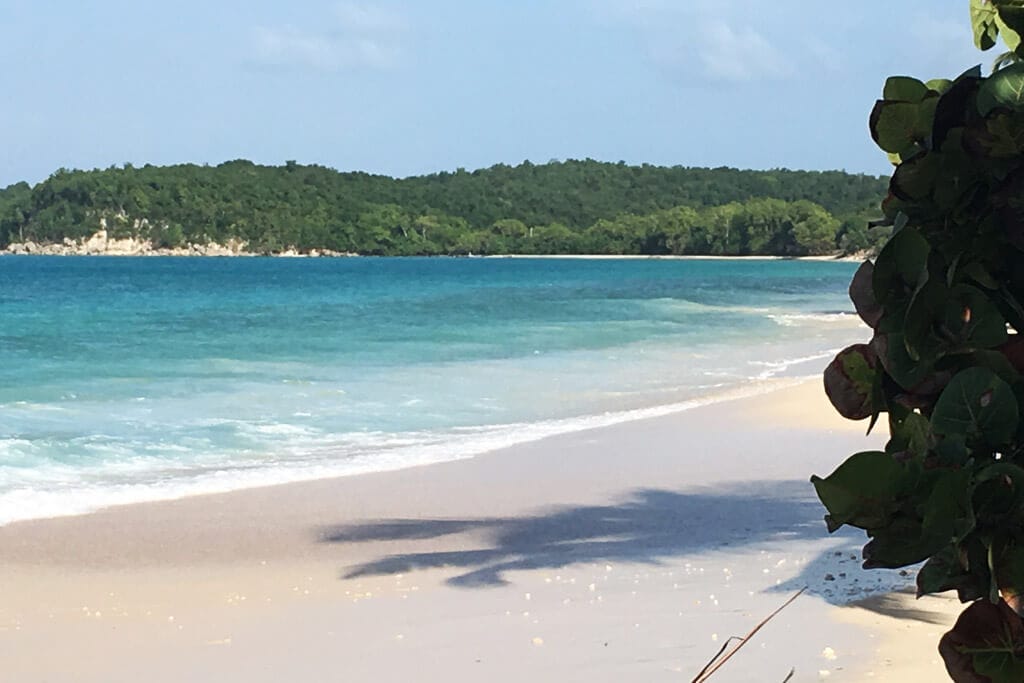
Dry season or wet season?
Carême is the driest season, hivernage the hottest and wettest. Météo-France, the French weather service, puts the first from January to April, sometimes from December, and the second from June or July to November or December. Even in carême, showers are frequent but brief: at Le Raizet, over 0.4 in (10 mm) falls in a day on just 1 to 3 days a month, against 5 to 6 from September to November. Marie-Galante gets a little less rain: 39 to 59 inches a year, against 61 at Le Raizet.
Month by month
It is warm all year: 84 to 89 °F (29 to 32 °C) in the afternoon, 70 to 76 °F (21 to 25 °C) at dawn, with the sea between 79 and 84 °F (26 and 29 °C).
| Month | Temperatures | Rain | Rainy days | Sea | Good to know |
|---|---|---|---|---|---|
| January | 70–84 °F (21–29 °C) | 3.5 in (89 mm) | 16 | 80 °F (27 °C) | Carnival; high season |
| February | 70–84 °F (21–29 °C) | 2.3 in (58 mm) | 13 | 80 °F (26 °C) | Driest month; Carnival ends |
| March | 70–85 °F (21–30 °C) | 2.8 in (72 mm) | 11 | 80 °F (26 °C) | High season until the 15th; Easter on March 28 in 2027 |
| April | 72–86 °F (22–30 °C) | 3.9 in (99 mm) | 12 | 81 °F (27 °C) | End of the dry season; low season |
| May | 75–87 °F (24–31 °C) | 4.8 in (123 mm) | 13 | 82 °F (28 °C) | Terre de Blues on Pentecost weekend; sargassum peaks May to July |
| June | 76–89 °F (25–31 °C) | 4.1 in (105 mm) | 13 | 82 °F (28 °C) | Hurricane season starts June 1 |
| July | 76–89 °F (25–32 °C) | 5.3 in (135 mm) | 15 | 82 °F (28 °C) | Humid heat, afternoon showers |
| August | 76–89 °F (24–32 °C) | 6.4 in (163 mm) | 16 | 83 °F (29 °C) | Sunniest month; hurricane peak from mid-August to mid-October |
| September | 75–89 °F (24–32 °C) | 7.8 in (198 mm) | 16 | 84 °F (29 °C) | Most thunderstorms; hurricane season peaks around the 10th |
| October | 74–88 °F (24–31 °C) | 8.0 in (203 mm) | 17 | 84 °F (29 °C) | Wettest month |
| November | 73–87 °F (23–31 °C) | 7.3 in (186 mm) | 17 | 83 °F (28 °C) | Hurricane season ends on the 30th; first chanté Nwèl |
| December | 71–85 °F (22–30 °C) | 5.0 in (127 mm) | 16 | 82 °F (28 °C) | Chanté Nwèl; high season from the 15th |
Air and rain: Météo-France, Le Raizet station (Pointe-à-Pitre airport, 30 miles away), as no climate summary is published for Marie-Galante; a rainy day means at least 0.04 in (1 mm). Sea: NOAA, off Capesterre. Figures are rounded.
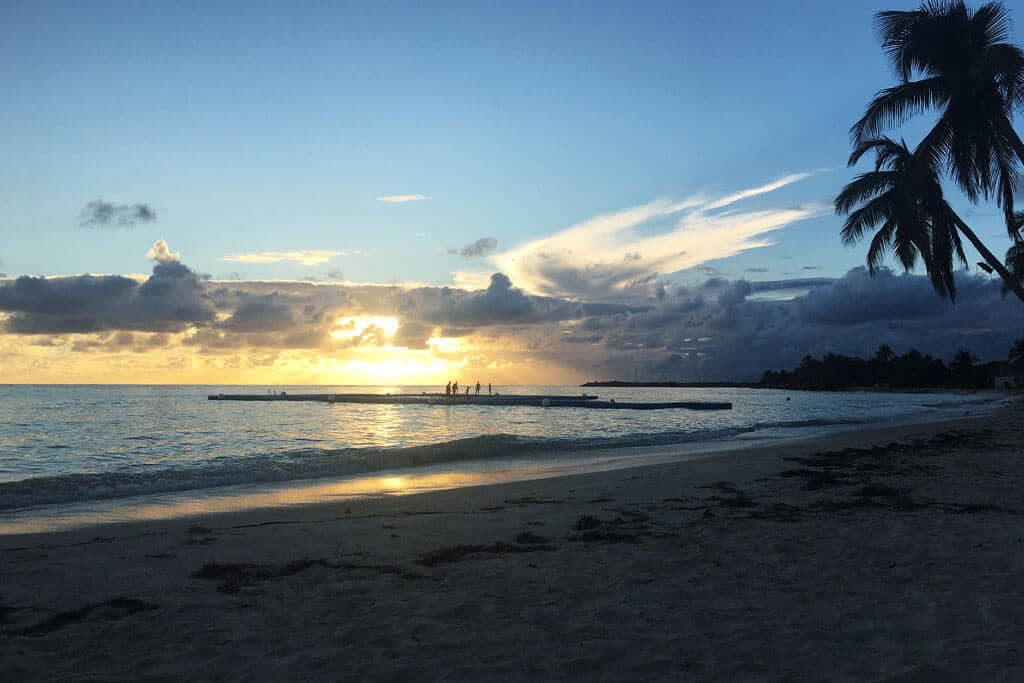
Sargassum seaweed
Yes, Capesterre is exposed to sargassum: Marie-Galante’s east coast is on the front line, the west coast far less so.
- What it is: floating brown seaweed (Sargassum natans and fluitans) that drifts in mats. Mass strandings have hit the Caribbean since 2011.
- When: mostly from spring to late summer, peaking from May to July; in 2025, from mid-March to mid-September, with a few arrivals until December. Amounts vary widely: 2011 to 2017 were quiet, 2018 remains the record year, and 2026 ranked third at the end of May.
- Where: pushed by the trade winds and currents from the east, it washes up on east- and southeast-facing shores; on Marie-Galante, Capesterre’s town center, La Feuillère and Petite Anse are the hardest hit. On the west coast, around Saint-Louis and Anse Canot, the wind usually keeps it offshore, though some can drift in.
- The smell: rotting sargassum gives off hydrogen sulfide, which smells of rotten eggs. The regional health agency (ARS) advises avoiding covered beaches and swimming among the mats, and asks vulnerable people (young children, pregnant women, people with asthma…) to move away once they notice the smell.
- To keep track: the Météo-France forecast (4-day stranding risk), Gwad’Air’s daily map (hydrogen sulfide), and advice from the ARS and the prefecture, all in French.
If Capesterre’s beaches are affected, the west coast is half an hour away: see the beaches.
Hurricane season
Hurricane season runs from June 1 to November 30, with most activity from mid-August to mid-October and a statistical peak on September 10. When a storm threatens, the local prefecture issues color-coded alerts:
- yellow: possible threat within 48 to 72 hours;
- orange: the threat is taking shape, within 24 to 36 hours;
- red: likely threat within 6 to 18 hours;
- purple: imminent threat, within 3 to 6 hours;
- gray: the worst is over.
Follow Météo-France alerts (in French) and take out travel insurance. If a red or purple hurricane alert covers your dates and prevents your stay, our rental terms (article 8) let you choose: free rescheduling within twelve months, subject to availability, or a full refund.
Festivals and holidays
Four highlights mark the year:
| Event | When | In 2027 | Good to know |
|---|---|---|---|
| Carnival | January to Ash Wednesday | January 10 to February 10 | Big parades in Pointe-à-Pitre and Basse-Terre on the last days; Vaval, the Carnival king, is burned on the final day |
| Easter | Saturday to Easter Monday | March 27 to 29 | Families camp out on the beaches all weekend, on Marie-Galante as elsewhere |
| Terre de Blues | Pentecost weekend | Around May 16; dates at terredeblues.com | Music festival founded in 2000, in Grand-Bourg (stages at Habitation Murat); free concert on the Monday |
| Christmas | Late November to Christmas | Weekends until December 24 | Chanté Nwèl: friends and family gather to sing traditional carols |
High or low season at the villa
High season at the villa: December 15 to March 15, plus May 12 to 19, 2027, for Terre de Blues (7-night minimum); otherwise, low season. A week costs €1,690 to €1,850 in low season and €1,950 to €2,150 in high season, with 2 or 3 bedrooms: see rates.
Read next
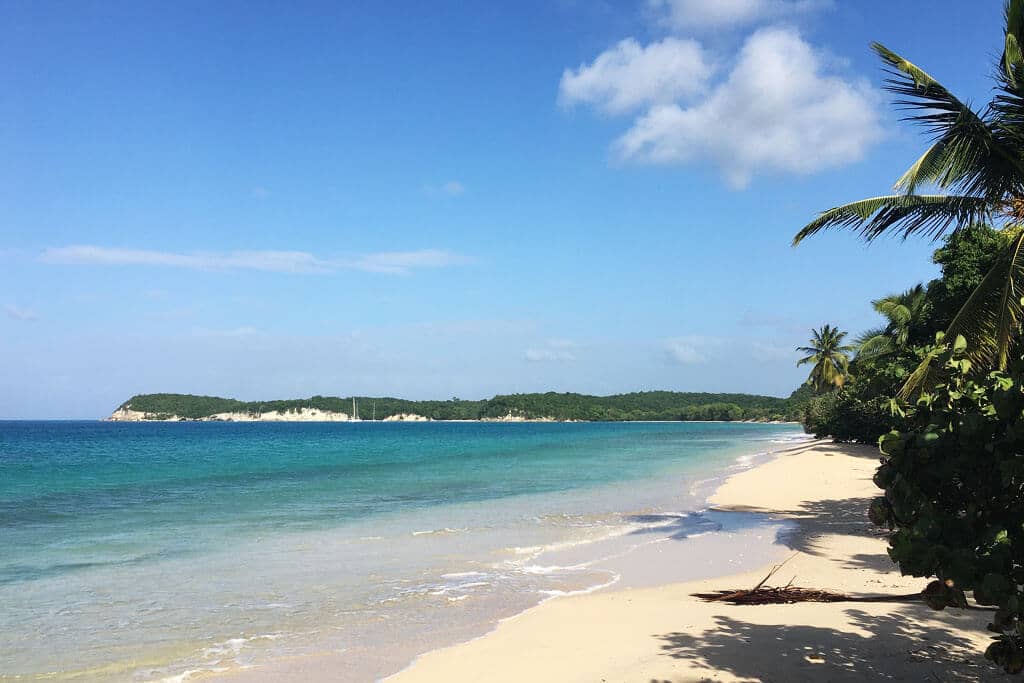
The beaches
Fourteen beaches compared: which one to pick with kids, for snorkeling or for the sunset, and how many minutes away.
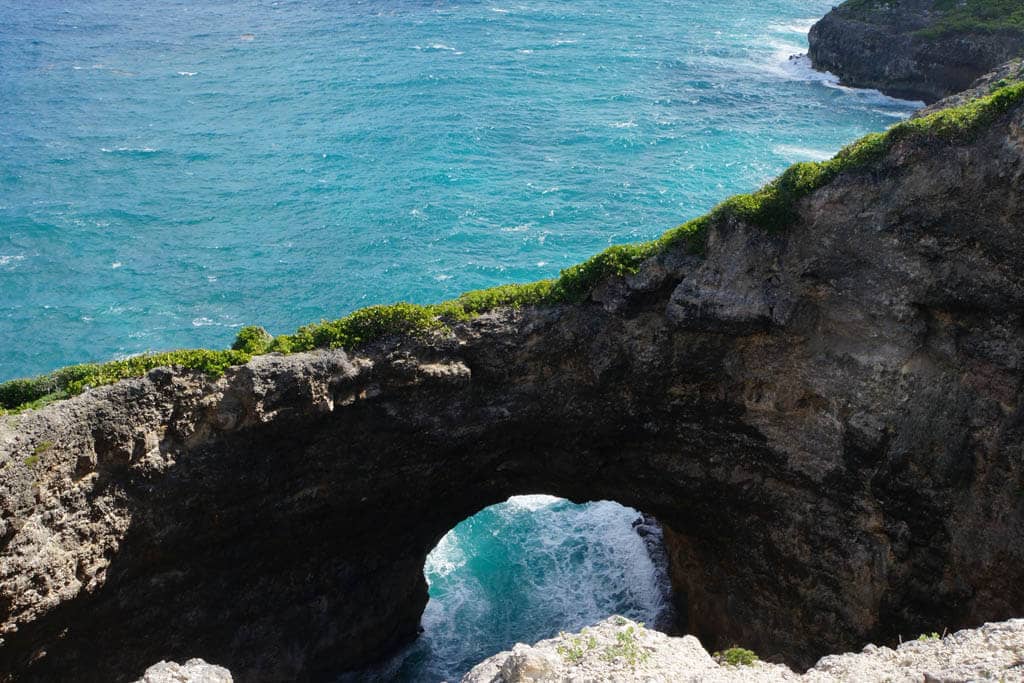
The northern cliffs
Gueule Grand Gouffre, Caye Plate and the coastal trails, with the precautions to take.
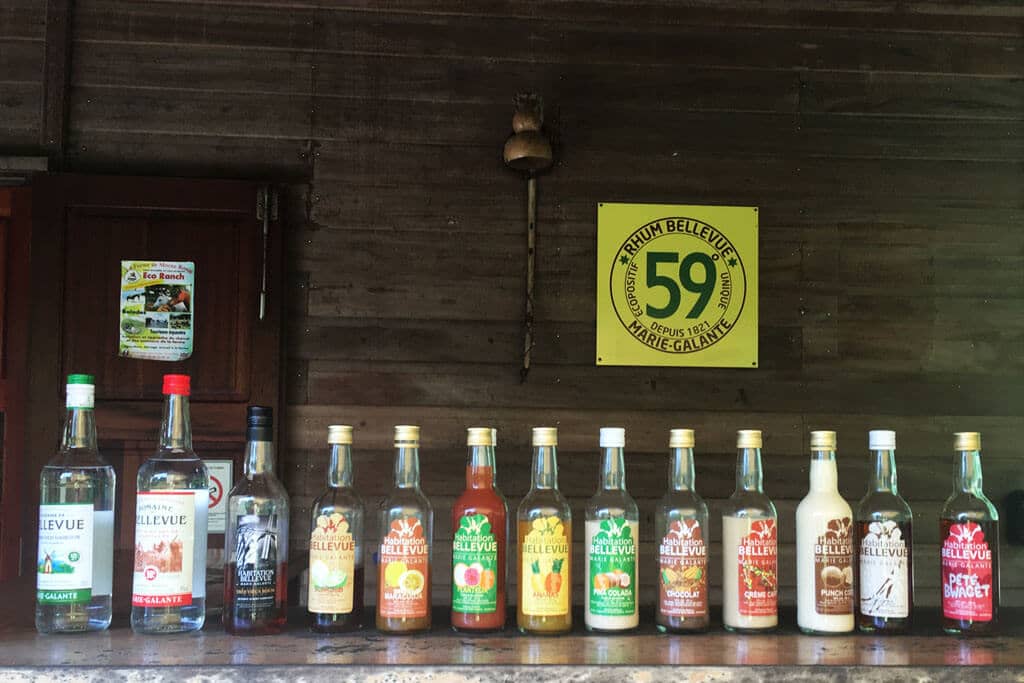
The distilleries
Bellevue, Bielle, Père Labat: three free visits, mornings only, and a rum bottled at 59%.
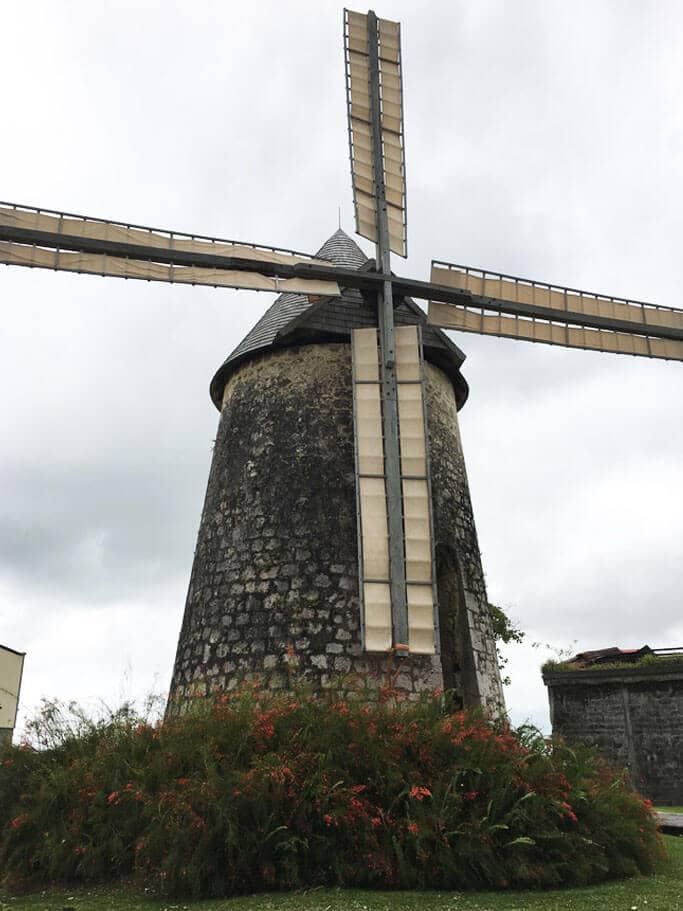
The windmills
The island of a hundred windmills: Habitation Murat, Bézard and two centuries of sugar history.
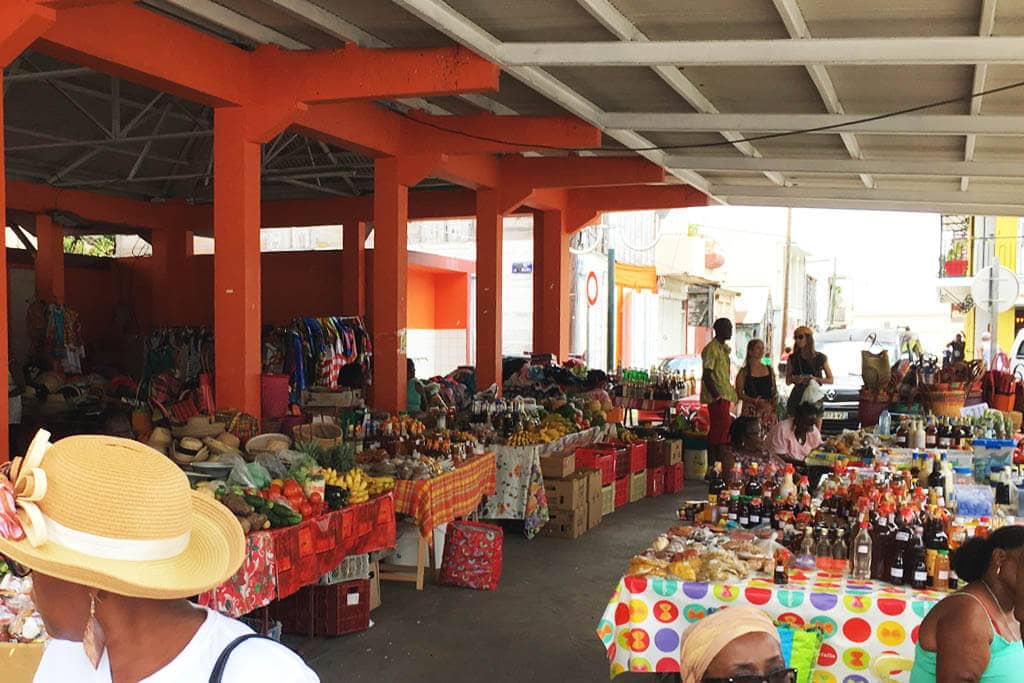
Grand-Bourg market
Saturday morning on the church square: fruit, spices, cassava flatbreads; fish at the harbor every day.
Sources
- Météo-France — Le Raizet (Les Abymes) climate summary, 1991–2020 (in French)
- Météo-France Guadeloupe — climate (in French)
- Météo-France, DRIAS — Guadeloupe’s climate and how it is changing, February 2026 (in French)
- NOAA — OISST v2.1 sea surface temperature, 1991–2020 monthly averages
- NOAA, National Hurricane Center — Atlantic tropical cyclone climatology
- Guadeloupe prefecture — hurricane alert levels, October 18, 2023 (in French)
- Météo-France — sargassum stranding forecast (in French)
- Météo-France — 2025 review of sargassum strandings in Guadeloupe (in French)
- Météo-France — the 2026 sargassum season at mid-point, June 11, 2026 (in French)
- Météo-France — how a seasonal current eases late-summer strandings, August 21, 2026 (in French)
- Météo-France — sargassum bulletin, March 8, 2021: Marie-Galante’s east coast (in French)
- Météo-France — sargassum bulletin, March 2, 2020: leeward coasts (in French)
- CNES, Géoimage — Marie-Galante, a sugar island: sargassum on the east and southeast coasts (in French)
- Guadeloupe regional health agency (ARS) — sargassum (in French)
- Guadeloupe regional health agency (ARS) — sargassum questions and answers (in French)
- Gwad’Air — daily air readings near sargassum strandings (in French)
- Guadeloupe prefecture — sargassum (in French)
- Outremers 360 — alert threshold exceeded in Capesterre-de-Marie-Galante, August 22, 2025 (in French)
- Guadeloupe Islands tourist board — Carnival (in French)
- Guadeloupe Islands tourist board — Easter (in French)
- Guadeloupe Islands tourist board — Terre de Blues festival (in French)
- Terre de Blues festival — official website (in French)
- Guadeloupe Islands tourist board — Christmas in Guadeloupe (in French)
- Route from the villa to Anse Canot (OpenStreetMap, OSRM)