Island guide
The windmills of Marie-Galante
Marie-Galante is called “the island of a hundred windmills” because it had 105 mills in 1830, at the height of the sugar economy; 72 stone towers still stand among the cane fields. To see one up close, head to Habitation Murat in Grand-Bourg, or to the Bellevue distillery, fifteen minutes from the villa, whose 1821 windmill has been restored.
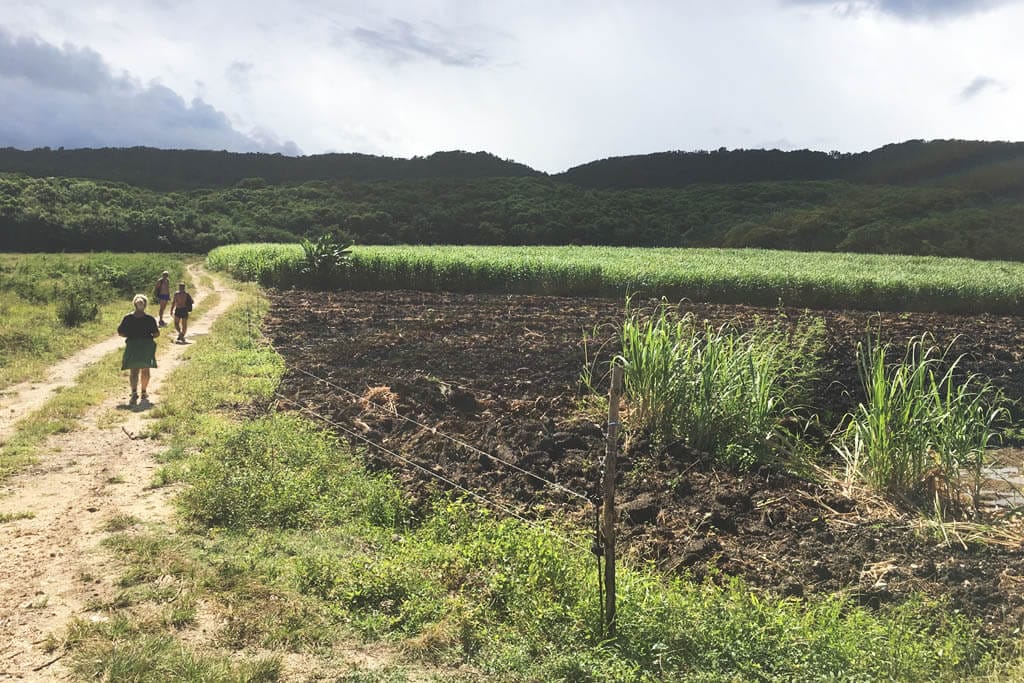
A hundred mills, really?
Almost. In 1830 the island had 105 sugar mills, but more than half were still turned by oxen. Windmills, which appeared around 1780, multiplied between 1815 and 1835, when sugar sold well. According to historians, there were never a hundred at once: 78 at most, around 1835–1840.
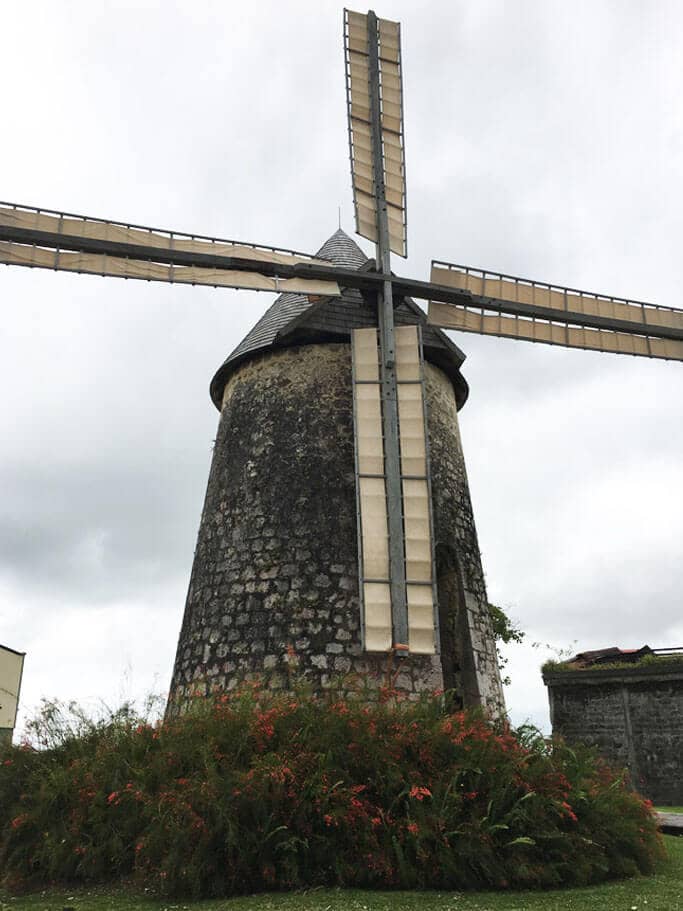
How a sugar mill worked
A slightly tapered stone tower, six to nine meters high, topped with a pointed roof of essentes, or wooden shingles. The roof swivels: a long wooden tail pole reaches down to the ground, and a few men push it to turn the sails into the wind. The shaft drives three rollers, the rolles, between which the cane is fed; the juice, called vesou, runs off to the boiling house. Until abolition in 1848, this was the work of enslaved people.
Habitation Murat, in Grand-Bourg
This is the most complete site. Dominique Murat bought the estate in 1807; his son built the windmill, dated 1814, then a neoclassical great house still known as “the château”. In 1839, 307 people were enslaved here: it was one of the largest sugar estates in Guadeloupe. Since 1979 the Département has run the Marie-Galante ecomuseum here: the mill tower, a listed historic monument, the ruins of the sugar works, an exhibition in the great house and a garden of medicinal plants.
The Bézard mill, in Capesterre
It stands one kilometer from the Bellevue distillery. Built around 1840, it crushed cane with three cast-iron rollers set outside the tower, an unusual arrangement. It stopped working around 1920, lost its roof and sails to the 1956 hurricane, has been a registered historic monument since 1979 and was first restored in the mid-1990s as a training project. Left unmaintained afterwards, it is now being restored again: the tourist office announces its reopening for November 2026 (tourist office page, in French).
More towers, more ruins
At the Bellevue distillery, the 1821 windmill can be visited freely in the morning. Just outside Grand-Bourg on the way to Saint-Louis, Habitation Roussel-Trianon brings together a windmill from 1800, large stone stables and the chimney of a steam-powered factory: listed ruins, open to all. Elsewhere, overgrown towers dot the inland roads.
From windmill to factory
Steam spelled the end of the windmills. The Grande-Anse factory, founded in 1845, took over; the island’s last working windmill, at Grand-Pierre, stopped in 1941, and since 1959 Grande-Anse has been the only sugar factory on Marie-Galante. Cane itself never left the landscape: it still covers more than 2,000 hectares and supplies the island’s three distilleries.
Read next
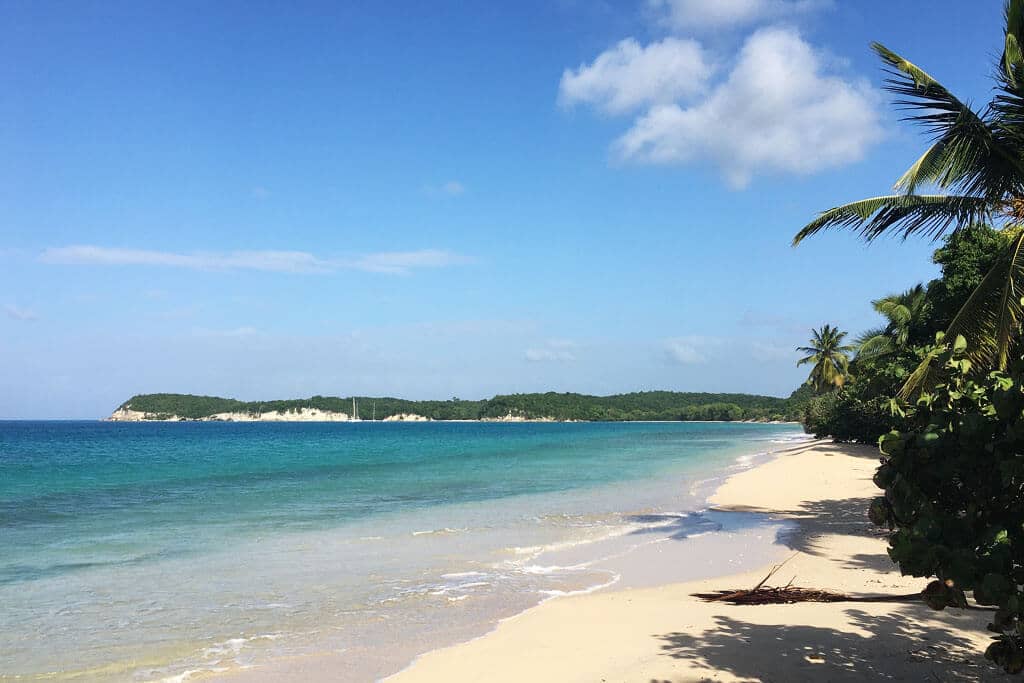
The beaches
Which one to pick with children, for snorkeling or to be alone, and how many minutes away.
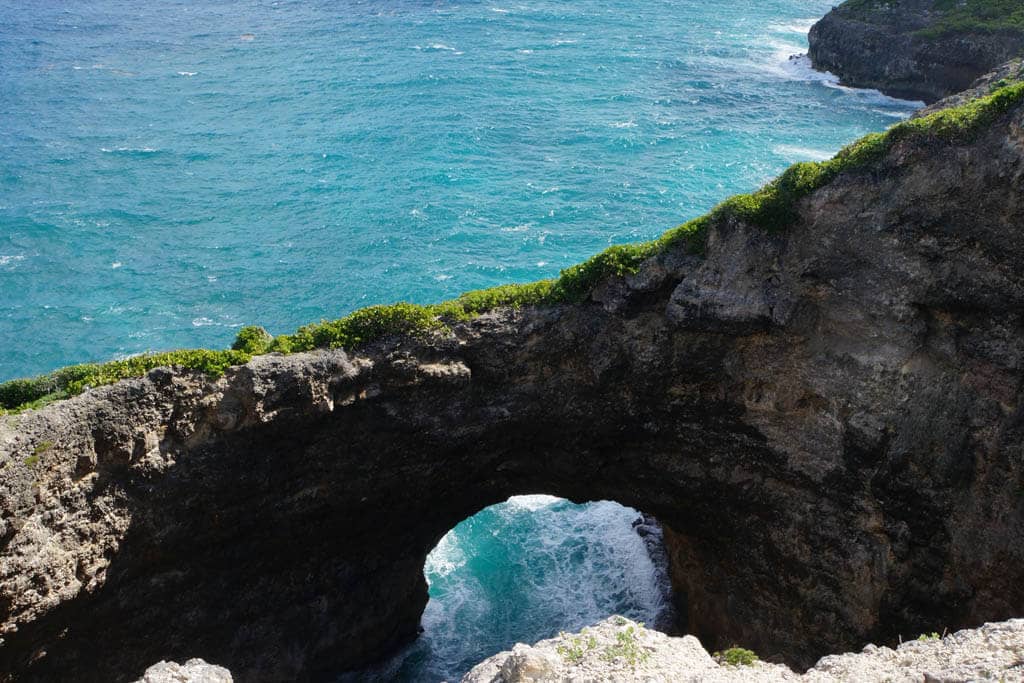
The northern cliffs
Gueule Grand Gouffre, Caye Plate and the coastal trails, with the precautions to take.
The distilleries
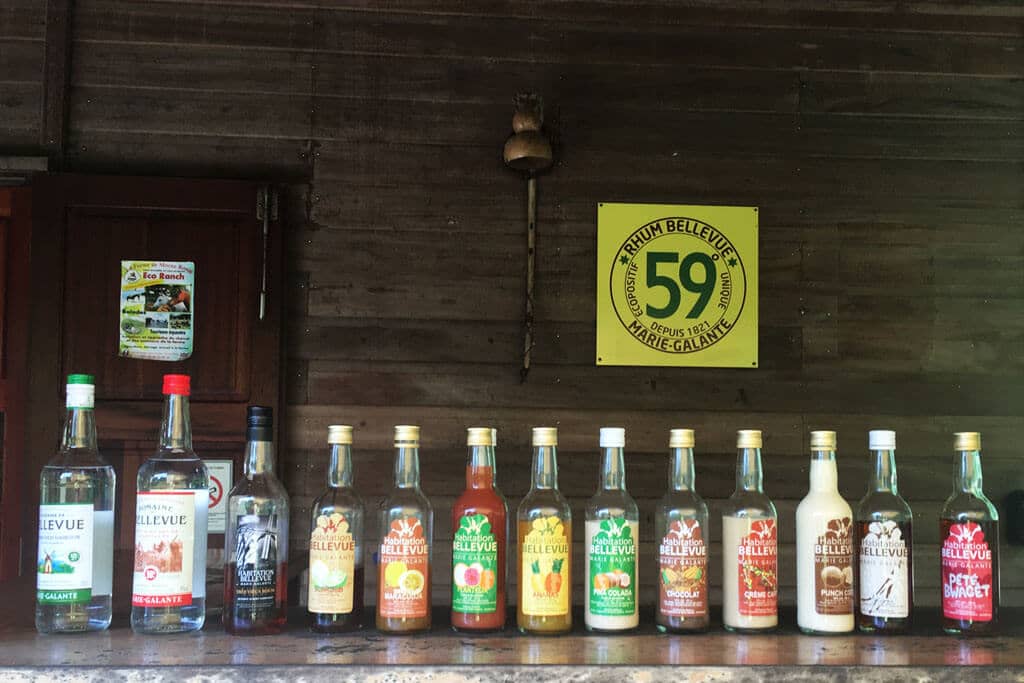
Bellevue, Bielle, Père Labat: three free visits, mornings only, and a rum bottled at 59%.
Grand-Bourg market
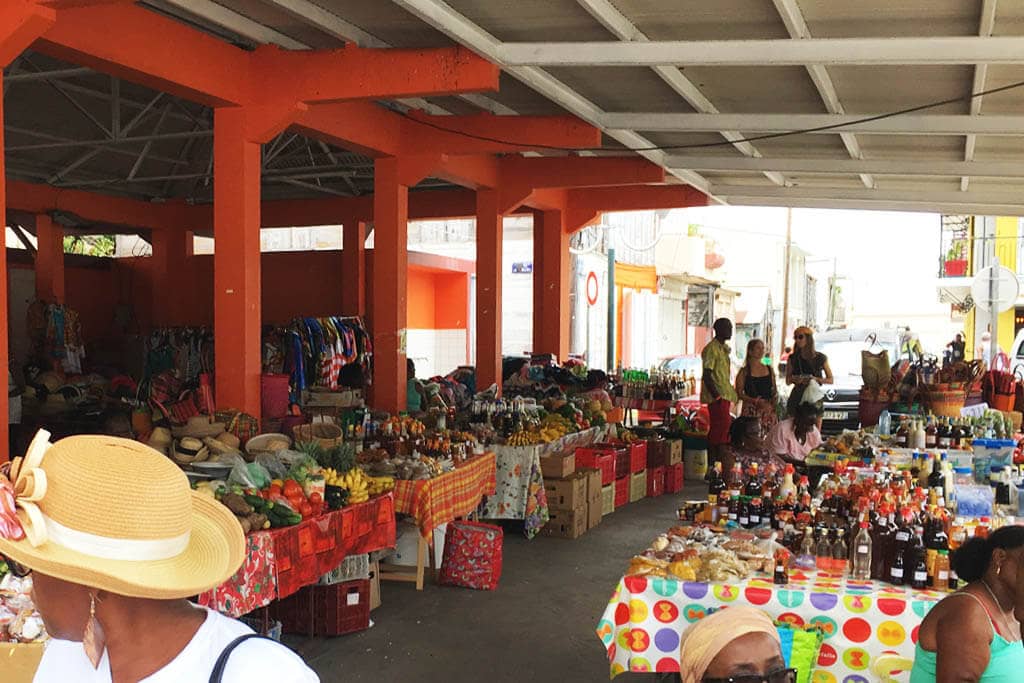
Saturday morning on the church square: fruit, spices, cassava flatbreads; fish at the harbor every day.
Sources
- French Ministry of Culture, Mérimée database — Bézard windmill (in French)
- French Ministry of Culture, Mérimée database — Habitation Murat windmill (in French)
- French Ministry of Culture, Mérimée database — Roussel-Trianon sugar works (in French)
- Guadeloupe Departmental Council — Habitation Murat, home of the ecomuseum (in French)
- Marie-Galante tourist office — history of the island (in French)
- Marie-Galante tourist office — Habitation Murat (in French)
- Marie-Galante tourist office — Belle Île en Sucre, Bézard windmill (in French)
- Marie-Galante tourist office — Habitation Roussel-Trianon (in French)
- Académie de Guadeloupe — Habitation Murat teaching resource (in French)
- C. Schnakenbourg, study of Marie-Galante’s sugar industry, Bulletin de la Société d’histoire de la Guadeloupe, 1981 (in French)
- M. Barbotin, “Les moulins de Marie-Galante”, Bulletin de la Société d’histoire de la Guadeloupe, 1967 (in French)
- DAAF Guadeloupe — 2020 agricultural census, Marie-Galante (in French)
- Route from the villa to Habitation Murat (OpenStreetMap, OSRM)